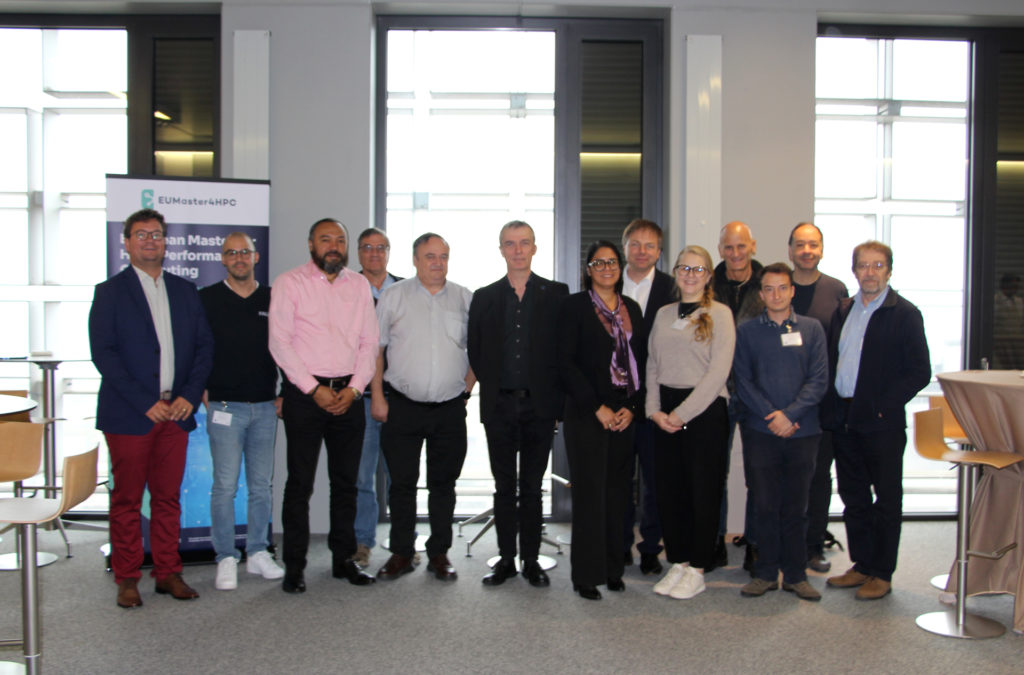
With more than 100 students enrolled and graduated during its pilot phase, EUMaster4HPC is building a foundation for the next generation of high-performance computing education in Europe. The project’s final General Assembly at the University of Luxembourg brought consortium partners together to reflect on these achievements, share lessons learned and discuss the programme’s long-term future.
The EUMaster4HPC consortium gathered at the University of Luxembourg on 8–9 October for the final General Assembly of the pilot phase. The meeting provided an opportunity to reflect on the programme’s journey, from its initial vision to its implementation, and to consider how its achievements and lessons learned can shape the future of high-performance computing (HPC) education in Europe.
During the pilot phase, EUMaster4HPC brought together universities, research centres, supercomputing centres and industry from across Europe and beyond to develop advanced HPC education through international academic collaboration. Discussions reviewed the programme’s development, including student enrolment and progress, curriculum development, mobility opportunities and overall impact. Consortium partners also reflected on what had worked well, where improvements could be made and which lessons should guide the programme’s future development.
Learning from the pilot and its students
Student and alumni experiences formed an important part of the discussions, bringing attention to the educational journey and outcomes of those directly involved in the programme. Their perspectives, alongside the consortium’s review of implementation, provided a basis for recognising the programme’s strengths and identifying opportunities for improvement.
By bringing together universities across Europe, EUMaster4HPC has fostered collaboration in specialised HPC education. The lessons learned during the pilot phase will help inform how the programme can continue to support students and respond to the evolving needs of research and industry.
Preparing for Europe’s future skills needs
The General Assembly also looked beyond the pilot phase to consider the changing technological landscape and the skills Europe will need in the years ahead. As HPC, artificial intelligence (AI), quantum computing and other emerging technologies continue to shape research and innovation, education and training will play an important role in developing the expertise needed in these fields.
Consortium partners discussed the legacy of EUMaster4HPC and the priorities that should guide its next phase. Long-term sustainability, continued collaboration and a curriculum responsive to technological developments were central considerations for the programme’s future.
EUMaster4HPC Phase 2 builds on this experience, with the ambition to educate 400 students across four cohorts, introduce new specialisations in AI and Quantum Computing, and strengthen collaboration between universities, research organisations, supercomputing centres and industry.
The final General Assembly marked both a moment to take stock of the pilot phase and an opportunity to look ahead. By building on the experience gained, learning from students and alumni, and strengthening its European network, EUMaster4HPC aims to sustain its contribution to Europe’s HPC skills ecosystem and prepare the next generation of specialists.
Read more: EUMaster4HPC launches second phase to expand HPC education across Europe
Learn more about the EUMaster4HPC programme